
Summer, Moonstone Beach
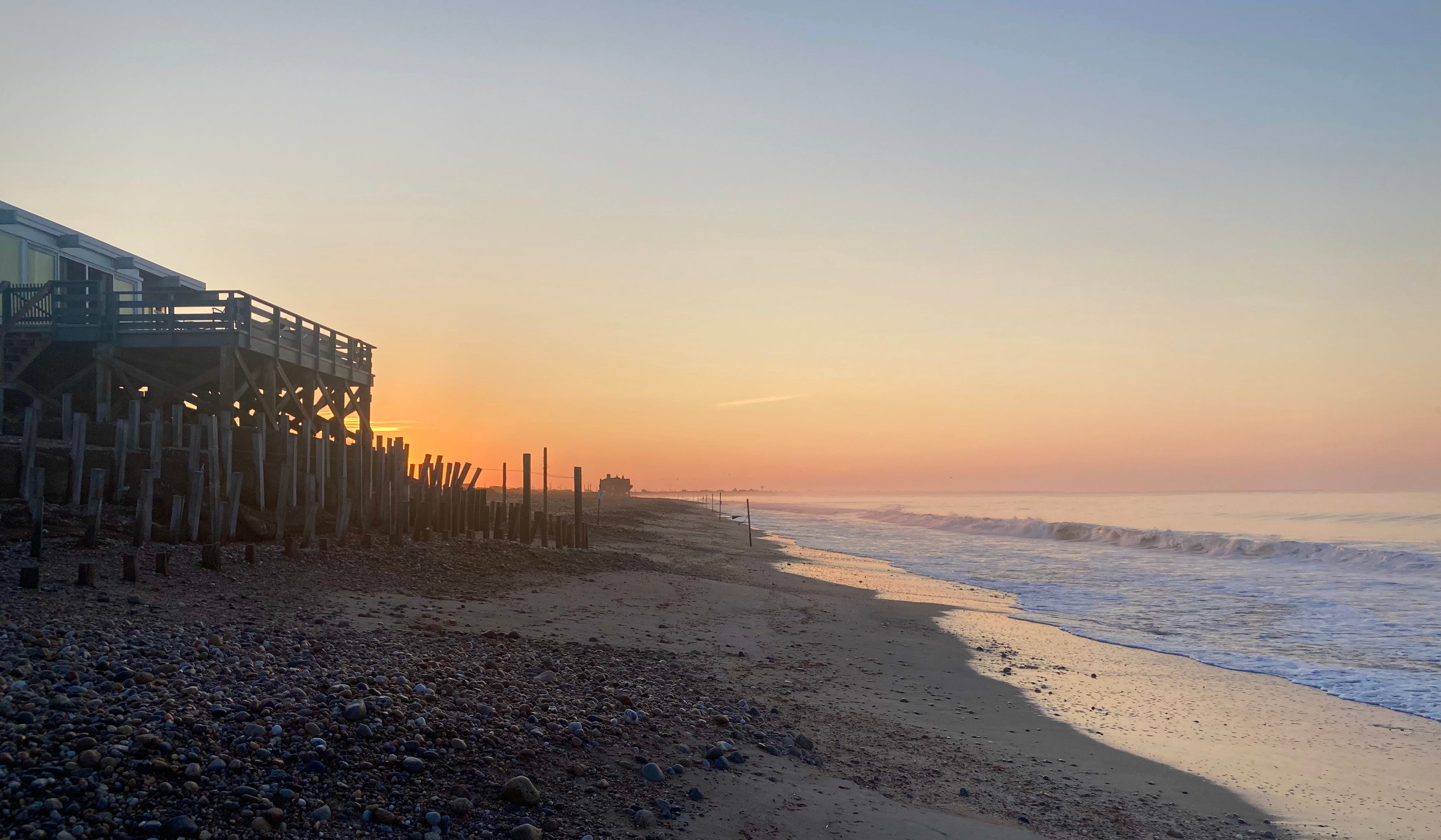
It’s hard to resist a place called Moonstone Beach, especially when it is one of the jewels of Rhode Island’s wild Atlantic coast. Oddly enough, summer can be a tricky time to visit Moonstone, for here, nesting terns and plovers are the priority from May through September. Most of the beach is roped off to protect their nesting area and signage forbids trespass, so the only time one can walk the sand here is at the lowest of tides. I’m happy to oblige, though mainly, I consider it more a fall and winter beach. My most recent time here was last December.
For many of these sunrise pilgrimages, when deciding where to travel, I simply look at the map, and a place captures my attention. This one was different. It was mostly about the name — the harmonics of it, I think. For me, it evokes something in the way of gentle whimsy. The season had no bearing. Summer is the season of an easy caprice.
***
I’m out the front door just after 3 a.m., and note the sharp cast of moon shadows. I look to the sky. A bright waning gibbous moon is perched high to the south, bleaching out most of the stars, but all looks clear. I take to the road under its watchful eye, and make my way to Rhode Island and Moonstone Beach.
There is one final stretch of dirt road that delivers me to the sandy dead end and the pathway out to the beach. I always, always feel childlike anticipation as I roll along here, lowering my window as I approach the turn around point to hear the first hints of the thundering swells that await me. I know the tide is low, sunrise is on the way, and the hard-foam clogs I’m wearing will soon be wetted in the surf. What might be revealed here this morning?
With 15 minutes to go before dawn, the early light is still dusky, the eastern sky is clear and tinted a soft shade of peach. In the calm air, a stingy ground fog is hovering along the beach and off into the far distance, so we are lightly shrouded in mystery, in the suggestion of something liminal. I say we because the air is alive with plovers and terns in a chaos of flight, an uproar the likes of which I have not seen since my last trip to Weekapaug Beach, a bit west of here. On that morning, the flights were in fits and starts, but now the air remains full. I reason it is feeding time, because many have something dangling from their beaks as they whiz about.
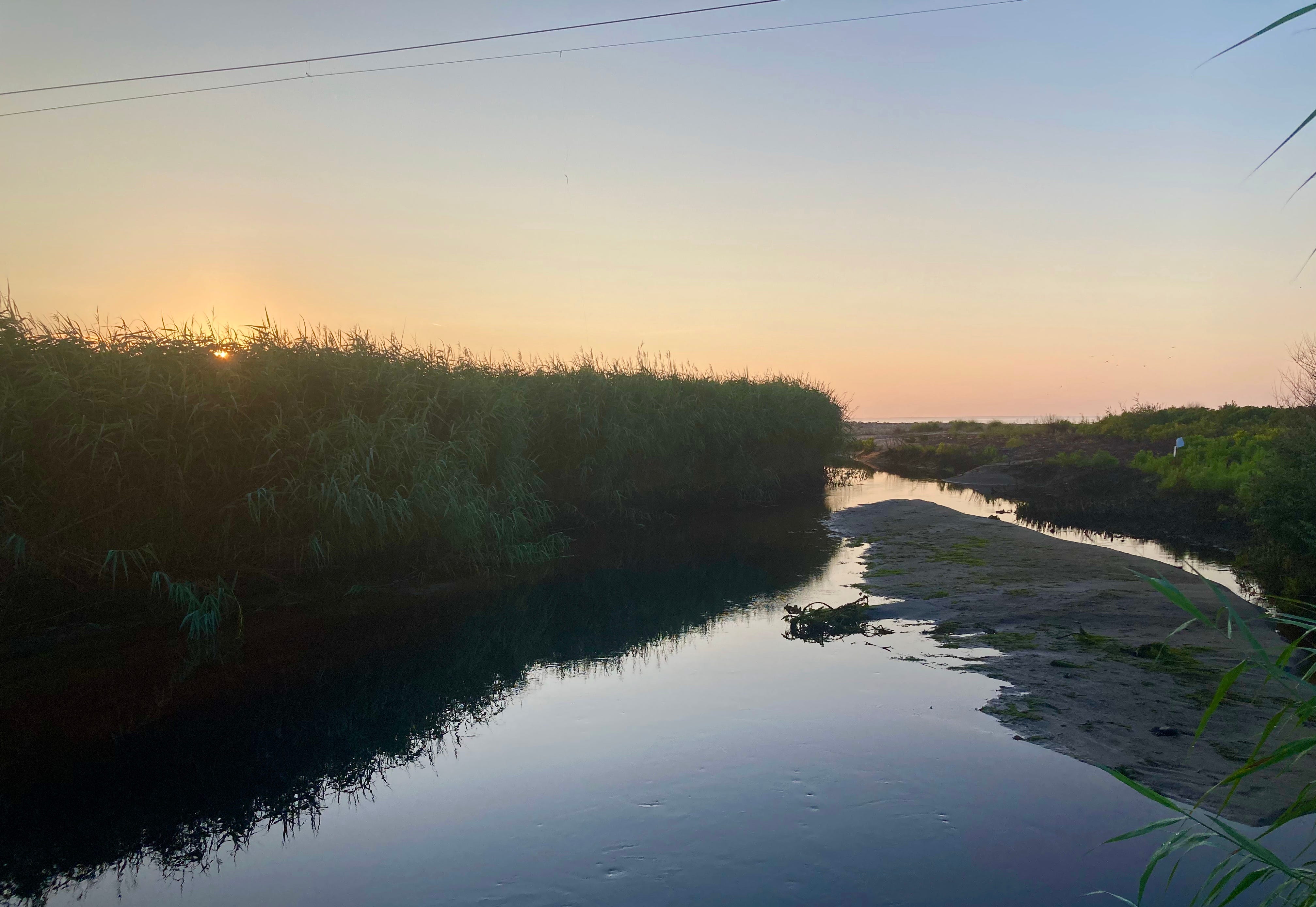
I saunter east alongside the two-to-four-foot surf, and listen to its unwavering language as I go; the cool wash of the larger waves rinses my feet. The sky is brightening, and I can easily see the exact point at which the sun will rise. I come to a place, though, where I can go no farther, for a breach has been opened by a recent storm between the brackish water of Cards Pond and the salty Atlantic, such that the pond has become more a lagoon or inlet. There seems to be some equilibrium with the ocean now at low tide, but as it rises, so does the salinity of the lagoon. I wonder about the consequences to the lush-emerald grasslands and its inhabitants, but there is an enduring wisdom in nature. The ocean has come calling much as do the extremes of the seasons, and somehow, the new lagoon will answer.
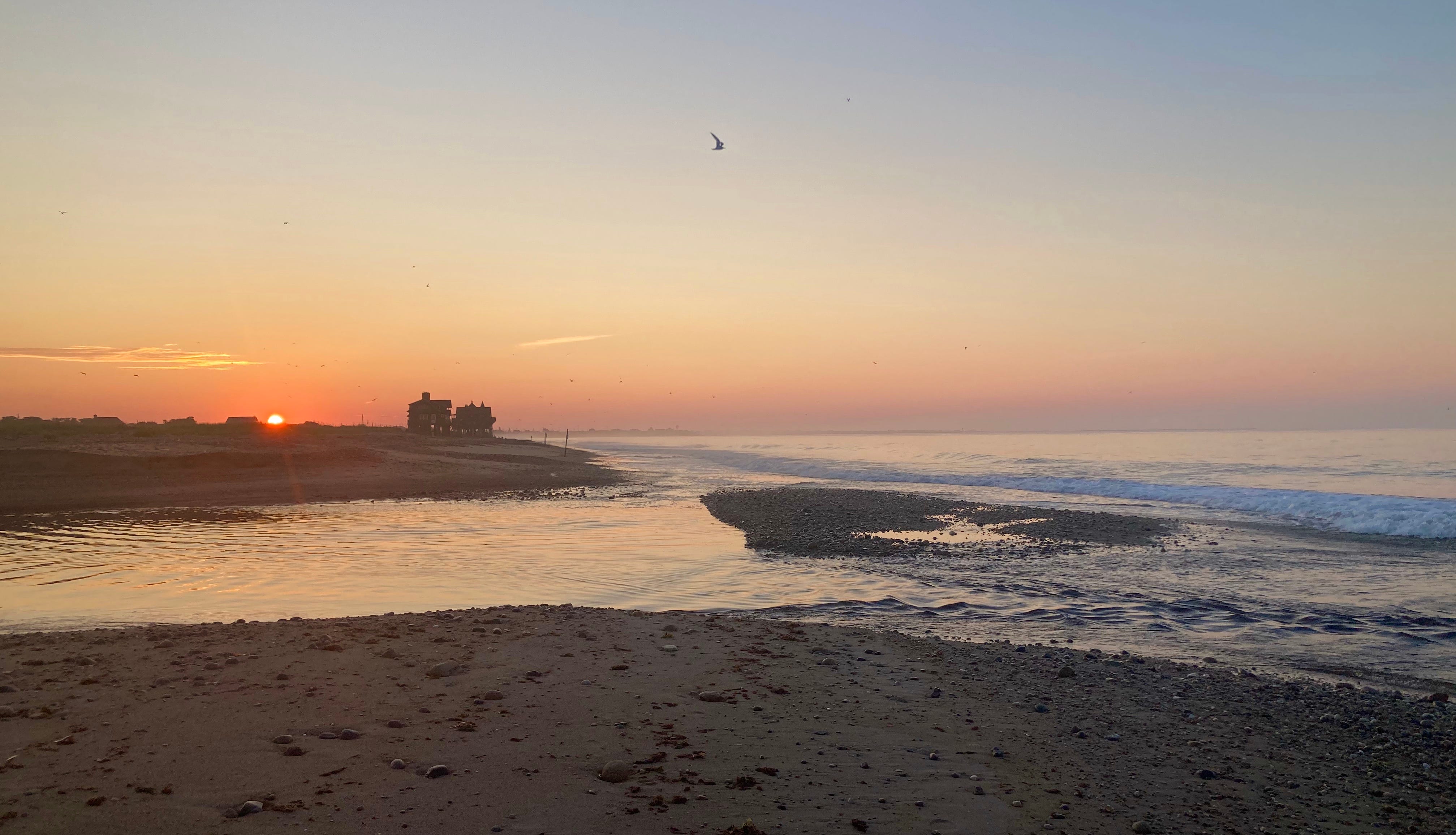
As I stand beside the brackish stream, the sun rises and comes calling upon the foggy air. Will the fog dissolve? Maybe slowly. A little later, I suppose. But at least for now we live in an orange, tender glow — magical and pure. Pure because I can more clearly see that all of it — the entire, gorgeous, sensate flush of it all, is a singular activity of the world as I am too, standing here in the midst of it — or maybe even it in the midst of me. And this sweet, light fog is the thing that smears it all together.
Once again, I am at this meeting place of light and earth and water. Am I considered unwell if I should whisper to it and ask it its true name? Do I expect an answer? Will I hear an answer? I will, but only if I remain silent and utterly expectant. How will it sound? Will it be something I can print on this page? Can I find the words that tell the story of its true name — the singular story of ocean swells and the language of pounding waves, of breaches in the sand and maniac birds, the story of how the earth rolls itself into new light that illumines the foggy air with such a delicate orange that I wish to weep?
I cannot.
I can only carry the ineffable answer hidden deep in the bones of the soul... It’s not what is said, but the feeling that is left in the time after. The terns and plovers know this. It is their way. So why do I feel so inadequate in my attempts to pass this on? Perhaps it is the hubris of the human way. We tend to miss the obvious. Communication happens in so many ways beyond our understanding, that we are rendered — speechless.
May I offer this to assuage my guilt? I suspect each of us carries a capacity to receive and offer great peace and comfort and understanding, likely because in our essential identity, they are integral to us. Wouldn’t it be wonderful if we were to find the answer to all the vicissitudes and joys of life in whimsical, perfect places, perhaps in our own private Moonstone? I would suggest they are found everywhere.
No seeking required.
Peace,
Stephen
oh I was so happy to come along with you to this magical Moonstone Beach, carried on your ever-poetic words.
And though you say you cannot find the words, it is your glorious words that do what pure poetry does: reaches the unsaid and leaves it unsaid. “It is not what is said, but the feeling that is left in the time after.” And In the case of this post, it is both the said and the unsaid that ripple on …
Thank you.
The peace of the sea the and
and a New day