
Shrouded
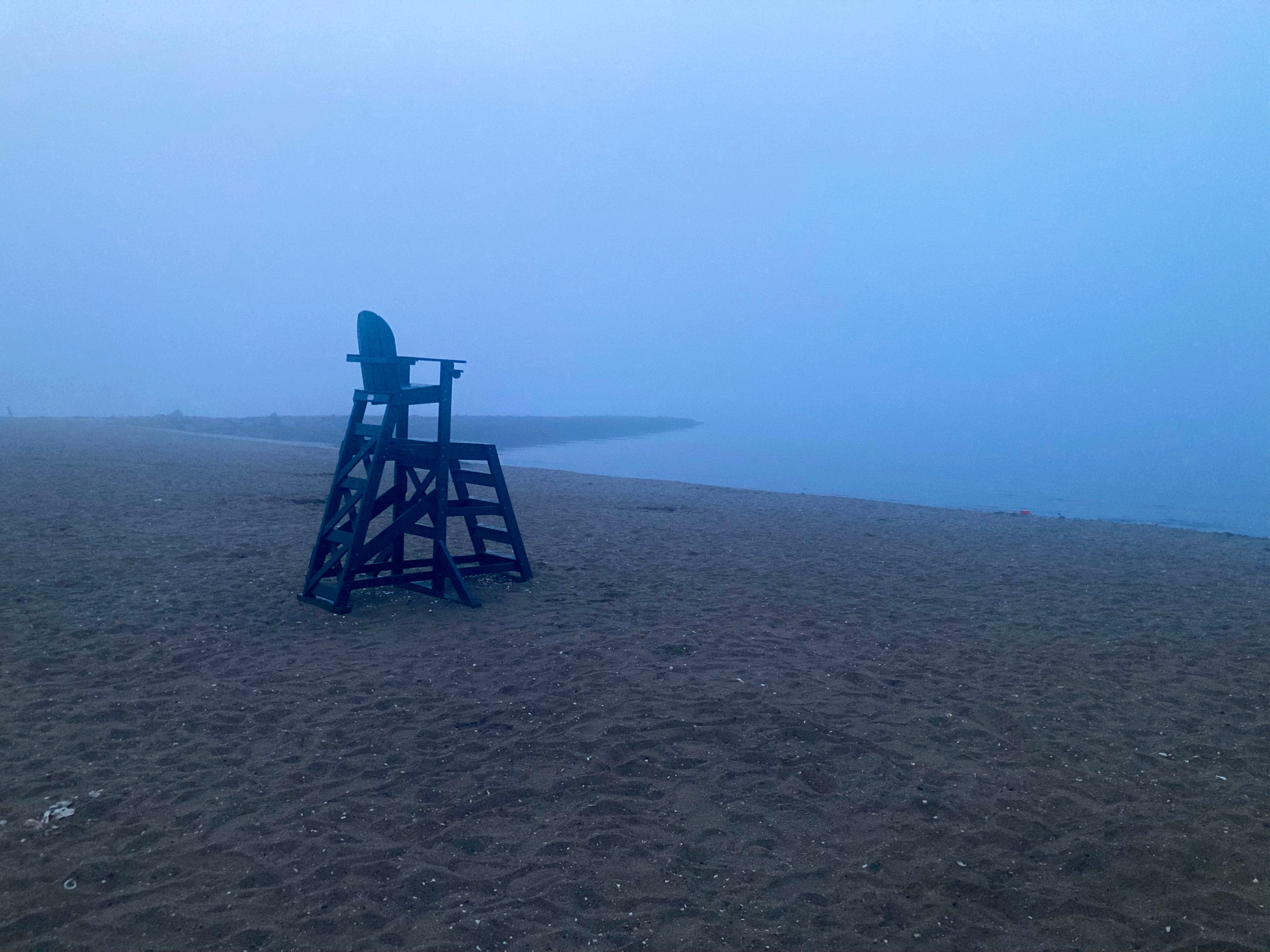
It had been a beautiful June in Connecticut. The days were mostly dry and warm with skies full of cerulean blue along with puffy, fair weather clouds. Evenings were clear and cool — good sleeping weather as we like to say. There had been some scattered dank, muggy days — hints of the month to follow as nature is wont to provide, but in such a minority that it became easy to let down one’s guard, even to deny the inevitable coming changes.
***
In the northwest hills, with these long days of June on the wane, the 4:00 a.m. sky was clear and starry; the air felt only a little cool and just a touch humid as I headed down the road toward a shoreline dawn. While passing No Man’s Land Swamp, I glanced over at the western sky just in time to see the full Strawberry Moon slung low over the tree line in its final movements of setting.
I didn’t begin to notice the fog until I’d crested the hill in the center of Morris, and headed down the other side into Thomaston for the turn south. By the time I reached the Naugatuck River Valley, it was like driving in an eggshell, and it never fully broke during the entire ride to Guilford Harbor and Grass Island. Turns out most of the state was blanketed in ground fog from the coast of Long Island Sound, up into the hills. Adding to this was my complacency in not checking the air temp/dew point spread before leaving home.
I suppose I could have turned around, returned to home and bed, and waited for another day. But that would have denied one of my early directives for this effort, a promise I made at the outset of these pilgrimages a year and some months ago — to accept where I’ve been called for the day as I find it, root around in the images and moods of the place, and then simply allow all that follows. Only once before has foggy air completely obscured the dawn, and that was close to home.
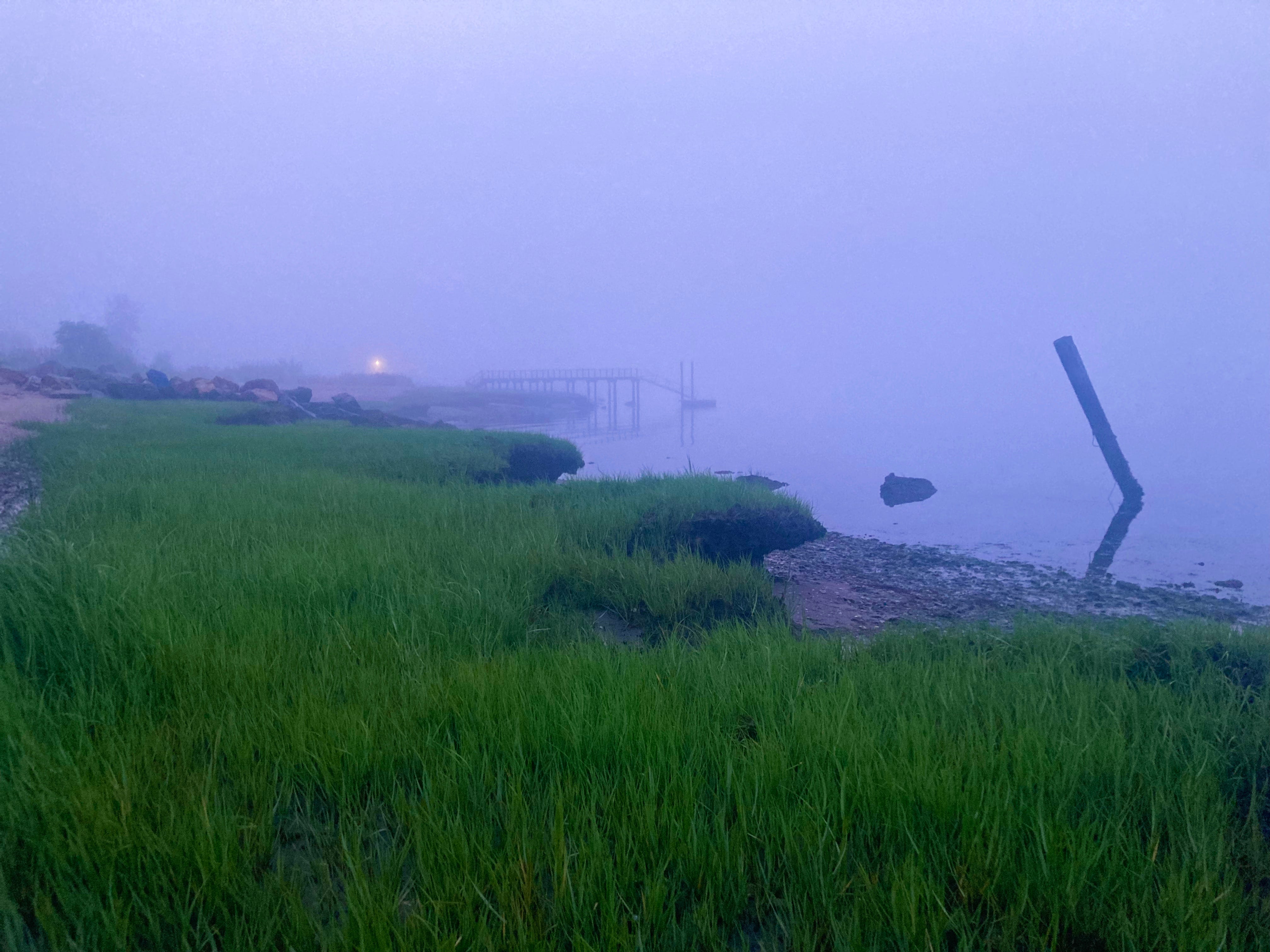
My first stop was at the mouth of the harbor where Jacob’s Beach faces the open water of the Sound. The air was saturated, there was no movement, there was no sound, the water was glass, and vision was measured in yards. The tide was at a slack low, lower than I’d seen in some time, and the glorious, pungent funk of muddy bottom was as present to the air as was the fog. Everything beyond the beach itself was ghostly. The world was in some kind of eerie suspension, in retreat, in a state of mourning — a world where I could have imagined the clocks had all stopped.
I walked along the swimming area, then crossed a rock jetty and picked my way through a patch of lush sea grass rooted in pasty, slick, gumbo bottom silt close to the waterline. Only at the lowest tides is this even possible. A few hundred yards across the harbor, I could barely make out the spectral hint of Grass Island, and toward the Sound, there was only a wall of gray. There would be no visible sunrise. This much was clear.
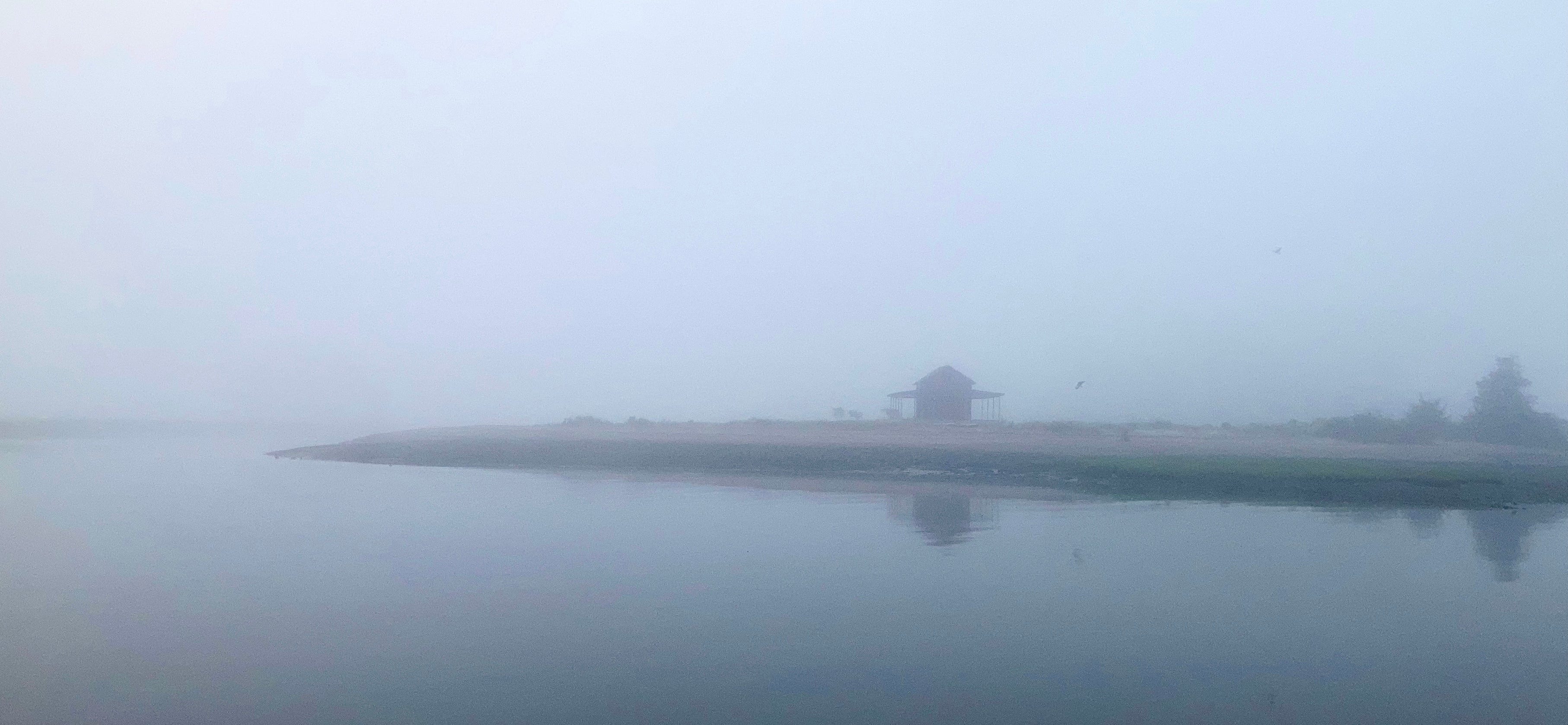
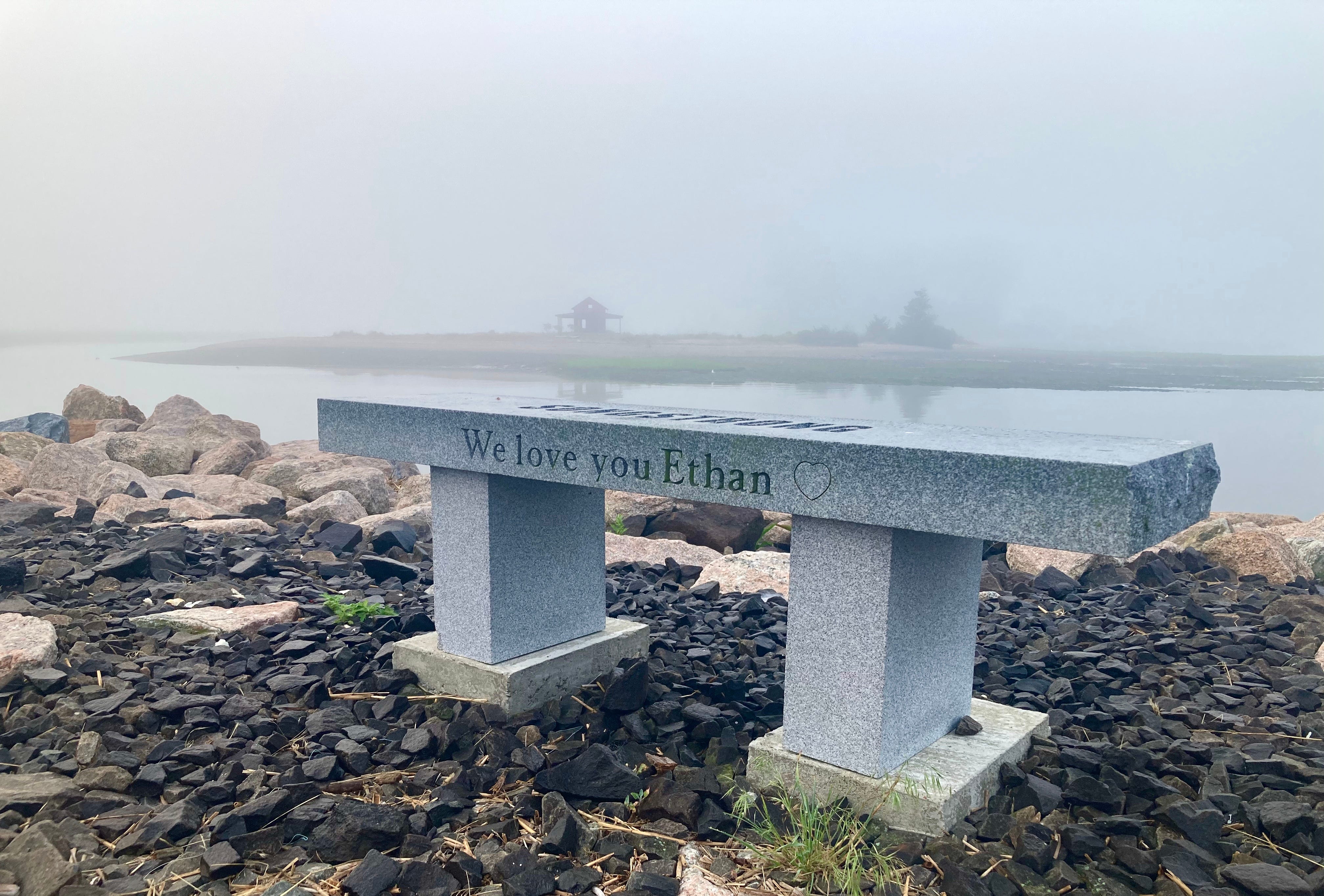
I left the beach and drove around to the boat launch where East River joins into the harbor, and where the iconic Grass Island Shack stands its silent, 90-plus-year watch, appearing like a phantom in the dead, vaporous air.
The mood thickened and darkened. The aroma of the tide was stronger, the hanging stillness more deeply felt; the haunted feel of the place was seeping into my interior life as a sorrow touched. I was touching loss. All the loss I’d ever known — a smearing cascade of it — undefined by any one incident and cued by solitude. Carried on a dark fog, how swiftly it had arrived. Like a switch was thrown. Astonishing.
On the trailing edge of this, a few questions arose: Why do I keep perceiving something (or someone) as lost to me when the simple presence of an early morning fog can evoke such recollection within a scant moment? I mean, wouldn’t this suggest something as close as pulse and breath? Something already here? Something right now? Something waiting for a shrouded pause in the distractions to make its former self known? And what of this foggy place on the shoreline? Where is the margin between it and the cascade it summoned? Maybe the world is full of such portals. Or maybe, there really are none. Wait an hour or so and watch this fog dissolve like it never existed and reveal an azure blue sky with burnished sunlight reflecting on the harbor waters, its tide now on the flood as the heat of a perfect summer day comes on.
There is an intersection here to behold where East River and the marsh creeks fill from the harbor’s slow rising — an intersection of geology and theology, of psychology and astronomy and flow, and all of it points just beyond to the holy of holies that holds it all, and out of which all is lifted, arriving on some kind of never-ending tide.
The fog was a mystery indeed, revealing far more than it ever could have hoped to hide. And, of course, all would have been lost in the turning around.
Peace,
Stephen
Perhaps it is because my house on Sachem St. was just two blocks from the water on Wollaston Bay, during my adolescence, that I ache in the best of all ways when I read your work, Stephen. Whatever, I find these essays so grounding, humble, sure, and real. Thank you.
So atmospheric and vivid in its mystery. I feel transported by your writing, arriving at that bittersweet yet sacred intersection of love and loss. Thank you.💜